Crisis Emerges in PoK
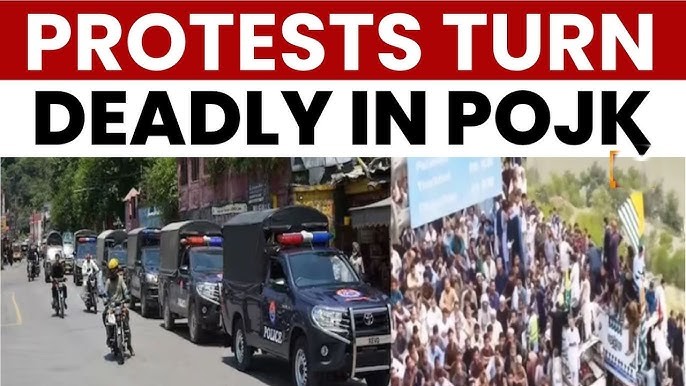
Pakistan Occupied Kashmir (PoK) has emerged as the hotspot of an extremely violent episode of unrest witnessed recently. Over the last few days, the region saw several incidents of violence where the protesters confronted the security forces resulting in dozens of deaths and hundreds of injuries. The recent unrest, which took place in Rawalakot, has put international spotlight on the troubled Himalayan region that is a point of contention with India.
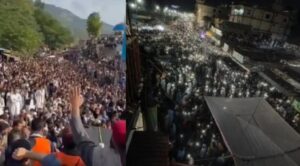
On the night of June 7-8, 2026, there were firing and shelling from the side of the security forces on protesters who had assembled outside the Combined Military Hospital, Rawalakot for offering their funeral prayers in memory of Shahzaib Habib, a protester who was shot dead by Pakistan Rangers on Friday.
Death Toll – Varied Sources
The issue of death toll is highly controversial, with various sources putting forth drastically varying numbers. According to the local activists and the Joint Awami Action Committee (JAAC), the latest clampdown claimed at least 27 lives in the funeral procession. The number was also cited by several media sources that reported on the situation.
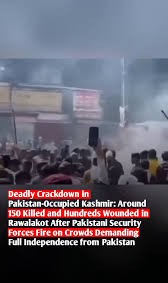
Other sources, however, estimate the death toll in an alarmingly higher range. Social media sources report that 150+ individuals lost their lives and another hundreds were injured in Rawalakot during the recent clampdown. An Instagram video published on June 9, 2026, claims that the Pakistani army had killed 200+ civilians on June 7-8, 2026.
It should be noted that there has been no statement on this issue released by any of the government officials from Pakistan yet. According to Reuters, 11 people were killed during clashes before the Tuesday protest. More than 70 others sustained injuries.
Casualties also occurred among security forces as a result of the unrest. Seven members of Pakistan’s security forces died as a result of conflicts related to the current unrest situation, according to local activists reported by News18. These included four policemen as well as three Rangers and Frontier Corps members. As noted by Police Chief Liaqat Malik, among the wounded people were 23 security forces and 50 protesters.
The Joint Awami Action Committee: A Cause for Conflict
The unrest is connected with the Joint Awami Action Committee (JAAC), a social movement which has become the largest critic of the government and security forces in recent months. The JAAC seeks for specific economic and political changes that have been long denied to the residents.
The demands of the committee are:
• Reduced electricity bills in the face of increasing costs.
• Improved governance and administration.
• Free health facilities for all citizens.
The demands have been raised since many years ago. In the last two years, protests organized by the JAAC regarding rising flour and electricity prices became violent due to clashes between the supporters of the organization and the authorities. The movement is characterized as moving from individual protests to organized civil disobedience, with participation of thousands of civilians.
The significance of the movement has made the organization a threat for the security agencies of Pakistan. On Friday, the local government of Pakistan labeled the organization as a banned organization on account of terrorism. The organization has been labeled as a terrorist outfit in Islamabad.
Crackdown: Raids, Arrests, and Restrictions on Internet Services
The crackdown has gone beyond the demonstrations on the streets and can be described as an attempt to suppress the JAAC and its supporters. The activists say almost 350 people have been detained over the last four days in a series of raids conducted across the area. There is another account mentioning 450+ arrests, whereas Reuters reports that 30 people were arrested following the first clash. Some other measures have also been adopted by authorities to curb the protest:
*The headquarters of the Joint Awami Action Committee have been sealed off
* Internet mobile services are restricted in some regions of the area
* More security patrols have been seen across PoK
* 1,000+ soldiers have been sent for the restoration of peace
* It has been suggested by the authorities that both domestic and foreign tourists leave the place prior to June 9
JAAC members are facing false criminal charges; they are accused of possessing illegal ammunition. More than 70 members of the JAAC have been arrested as per the report.
The Spark: Death of Shahzaib Habib
The spark behind the latest incidents of violence was the killing of a trader, Shahzaib Habib. He had been shot dead during a confrontation between him and security forces in an earlier incident, as per the reports.
This particular death became the cause for protest against what is being considered police brutality and extrajudicial killings. In an incident of funeral procession that occurred on June 7, the most deaths occurred as the security forces tried to scatter the protesters of a banned coalition of civil society organizations.
Sardar Waheed Khan, the commissioner of the Poonch region told Reuters that “Four policemen and an innocent civilian were killed when the assailants fired at them,” and added that “Due to action taken by the law enforcement personnel, six protesters were killed.” However, according to JAAC leaders, there was no attack launched by the protesters; rather it was security forces that fired shots at mourners.
Background Information
This unrest is a manifestation of the long-term dissatisfaction of the people in PoK against both the economic and political challenges they have had to endure for several years. The economic situation in the territory has not been good, with the people complaining of high prices, lack of a functional healthcare system, and expensive electricity.
Residents of the territory are also complaining of political rights deprivation as they believe Pakistan government has failed to grant them any autonomy. Demonstrations over a court decision to retain a long-standing representation arrangement for Kashmiri refugees have also broken out in Pakistan-administered Kashmir.
There are reports that the protesters were blaming the authorities of denying them their democratic rights, but authorities claim that armed protestors attacked members of the security forces and other members of the public.
Protests are being staged by those advocating for an end to the representation arrangement for Kashmiri refugees living in Pakistan through the reserved seats in the legislature. There are many Kashmiri refugees in Pakistan.
The city of Rawalakot has become the hub of the unrest, with reports of road blockages, clashes, and disruption of basic utilities. The Himalayan territory continues to be in conflict with India.
Escalation: Strike Protests and Further Unrest
The situation has escalated significantly, with the announcement by the JAAC of an indefinite strike from June 9 onwards. This is because the authorities allegedly violated agreements reached in the Muzaffarabad agreement, which was intended to address grievances between the authorities and the JAAC.
With growing dissatisfaction, the authorities have had to prepare for further unrest. As long as unrest continues, unrest seems to be a constant feature in Pakistan-occupied Kashmir. The JAAC, having consistently defied the authorities’ efforts, continues to be a nuisance to the administration, and its followers shout slogans against the Pakistan army.
Security Force Actions: Lethal Actions and Political Categorization
Pakistani security forces have used force against the protesters. According to the police, members of the JAAC had gathered to take their comrade to a hospital after he died due to police shooting. According to the commissioner, the aggressors shot at security forces, though according to the JAAC leadership, it is not true.
The categorization of the JAAC as a terrorist group under the provisions of anti-terrorism law is seen as a dramatic step by Pakistan in its actions.
Future Prospects: An Uncertain Future
As at June 9, 2026, the crisis in Pakistan-Occupied Kashmir has not yet been resolved. It appears that the ongoing indefinite strike declared by JAAC will be sustained, with the likelihood of more violence ensuing. Growing concern for the international community, specifically British Members of Parliament, might influence Pakistan to reevaluate its stance on the crisis.
The series of deadly clashes that have occurred in the past week constitute the worst form of unrest seen in PoK in a while. Whether this crisis will lead to any reform or will escalate into something bigger is still unknown, but the human toll has been enormous up to now.
The future of this area hinges on whether Pakistan can recognize the problems arising from economic disparity and disenfranchisement or follow through with the history of suppression that has caused this cycle of violence. The people of Rawalakot and PoK live in Jalan of uncertainty as they fight for their future.