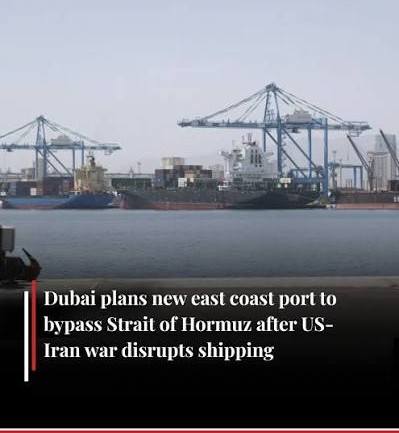
United Arab Emirates (UAE) is set to undergo one of the biggest changes in its maritime policy in years due to its response to recent disruptions to shipping from the US-Iran war. DP World, a port operator based in Dubai, intends to construct a new deep-water port and a container terminal in the region of Fujairah in the UAE, outside the Strait of Hormuz. This will allow the ships entering the UAE to avoid one of the most vulnerable waterways in the world.
Why the UAE is Building a New Port
Strait of Hormuz is among the busiest marine bottlenecks in the world that links the Persian Gulf with the Gulf of Oman and the Arabian Sea. One fifth of the total oil transported globally and a considerable amount of liquefied natural gas (LNG) shipments use this strategic water passage.
The current US–Iranian dispute has led to disruption in shipping through the strait as a result of which ship owners have had to bear delays and increase in the cost of insurance. This incident highlighted the risk associated with depending too much on a particular marine channel. In reaction to the situation, the UAE opted for building a new port in the eastern coast of the country, where cargo ships can bypass the Strait of Hormuz completely.
Why Was Fujairah Selected?
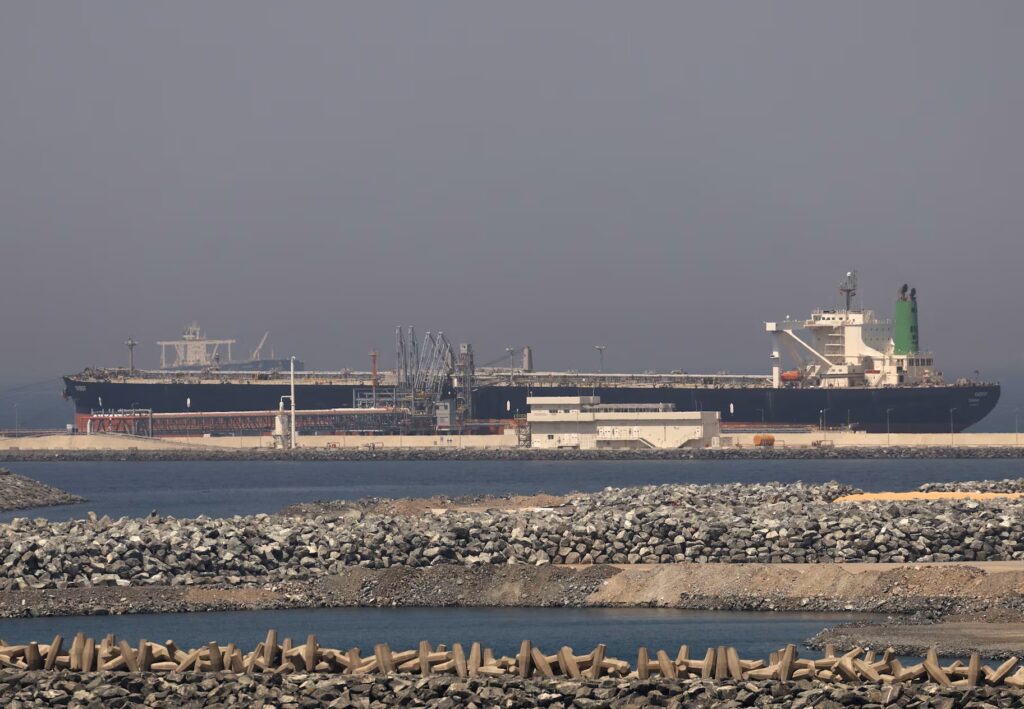
The projected port will likely be constructed in Fujairah, an emirate that is situated on the Gulf of Oman. In contrast to Dubai’s famous Jebel Ali Port, Fujairah is situated beyond the Strait of Hormuz, which means ships can access the port directly through the Indian Ocean.
Being situated in this way enables ships to avoid docking within the Persian Gulf and makes them less vulnerable to any potential military conflict and blockade. The UAE currently uses Fujairah as a significant port for its oil exports, and the creation of a new port here would make it strategically significant even more.
Effect of the US-Iran Conflict on Shipping
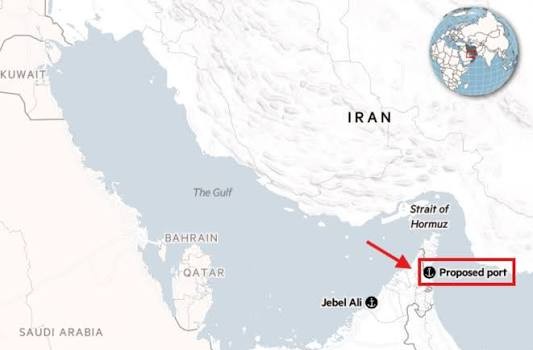
However, the recent regional dispute has caused great uncertainties for international shipping firms. Shipping through the Strait of Hormuz has been greatly reduced due to rising levels of security threats and route changes by some shipping firms.
It was reported that there has been a sharp decline in the use of Jebel Ali Port in Dubai at the height of the dispute, owing to the fact that most ships chose not to enter the Persian Gulf.
DP World’s Vision for the Future
DP World, one of the biggest operators in the global port sector, will spearhead this project. DP World intends to establish a state-of-the-art multipurpose port with efficient container handling systems to accommodate the international shipping companies.
Company executives have made it clear that the intention behind the project is not to supplant Jebel Ali Port, but rather to act as a backup for when the area becomes unstable. The new port at Fujairah will act as a secondary route in case of instability in the region.
Economic Benefits to the UAE
The new port will provide many economic benefits to the UAE. For one thing, it is anticipated to improve the country’s logistics industry, draw in investments, and generate jobs in areas of construction, transport, and port operations.
Providing shipping firms with a safer passage to the Gulf, the UAE will increase its standing as a trading and logistics center of the world. The development will also contribute to the long-term economic diversification plans of the country through the growth of its non-oil sectors like logistics, manufacturing, and international trade.
Implications for Global Trade
This development has many implications which go beyond the UAE. International businesses rely on secure maritime routes for the transport of oil, gas, electronics, food products, cars, and consumer goods.
An alternate port away from the Strait of Hormuz will give the shipping firms some leeway in times of future crises in the region. It won’t remove all possible risks, but it will be a good choice to fall back on, which will save time and reduce insurance rates.
Experts think that there may be more such investments in the future as countries try to safeguard themselves from potential economic troubles due to geopolitical tensions.
Intense Competition in the Region
The UAE is not the only Gulf country that has decided to build alternative infrastructure. In all Gulf countries, there is an expansion of ports, pipelines, and logistic networks aimed at decreasing the reliance of the country on its maritime chokepoint.
It is clear that competition among Gulf ports will increase in the future because each country wants to position itself as a preferred entrance for international trade. Expansion of Fujairah can provide UAE with a competitive edge in case of ongoing political tension in the future.
Conclusion
The move by Dubai to create a new east coast port is undoubtedly a strategic approach towards mitigating the impact of disruptions in the shipping industry due to the current crisis between the US and Iran. Creating another port at Fujairah, which is away from the Strait of Hormuz, allows the UAE to secure its trade routes and supply lines, as well as to diversify its operations in order to avoid the most geopolitically charged waters in the world.
Though Jebel Ali continues to be Dubai’s main port, this development serves as an important buffer for any future events involving the region’s geopolitics. As more and more global politics affect international business, infrastructure development such as that of Fujairah is set to become even more significant for the smooth operation of international business.