The tragedy involving the commercial cargo vessel MV Golden Leo happened on the evening of July 19, 2026. This event marks a significant increase in attacks on civilian maritime transport in the Black Sea.
The text below outlines the incident, the geopolitical context of Black Sea shipping lanes, and the official responses from global powers.
The Incident: Attack on the MV Golden Leo
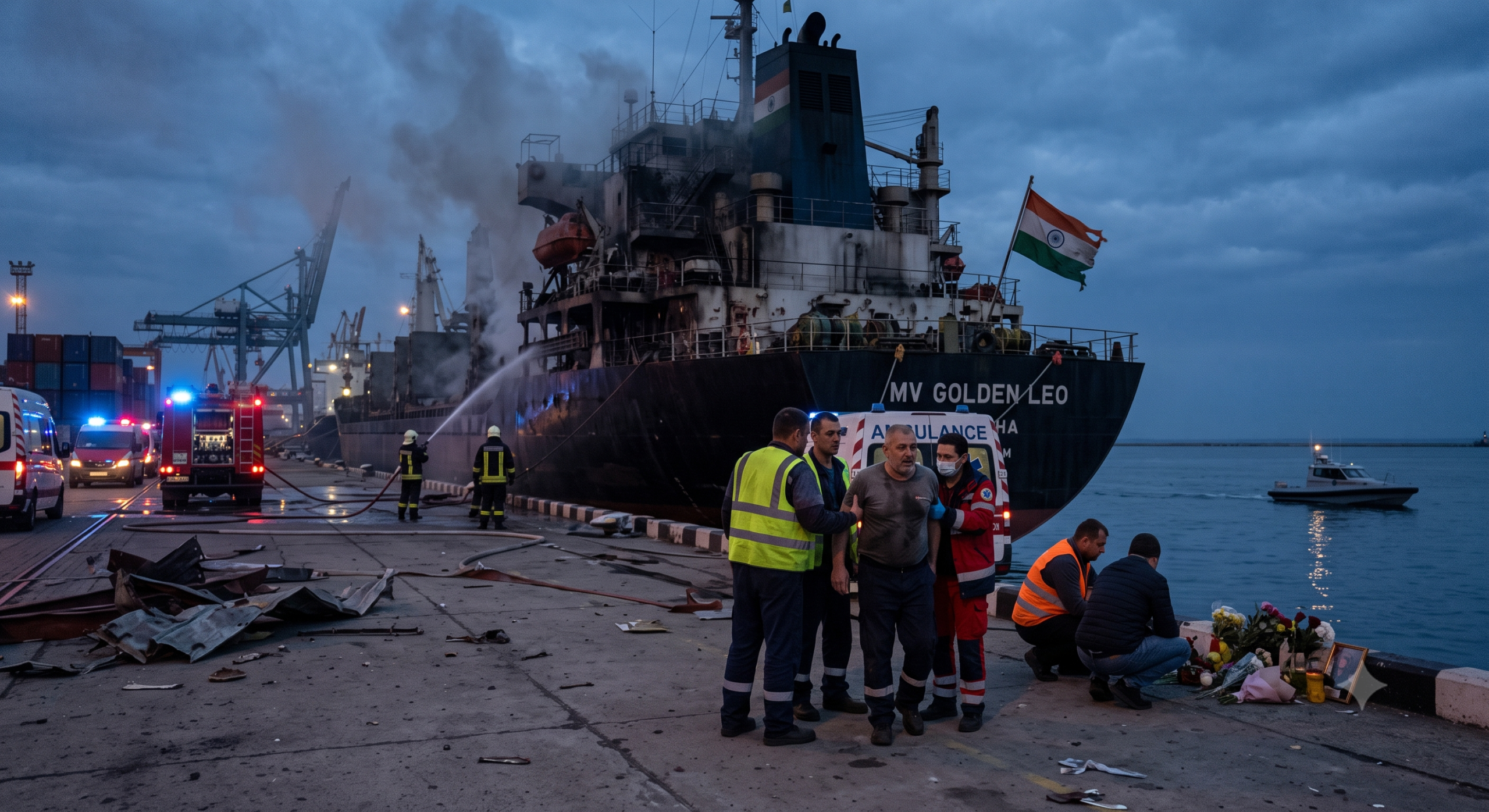
On July 19, 2026, the Guinea-Bissau-flagged bulk carrier MV Golden Leo was loaded with corn and leaving the southern Ukrainian port of Odesa. Statements from the Ukrainian Air Force and Navy report that Russian forces targeted the area with air-launched cruise missiles, specifically **Kh-59/Kh-69 variants.
One of these missiles hit the starboard side of the vessel as it moved away from the coast, immediately causing a severe fire on board.
Crew Composition and Casualties
The vessel had a 17-person crew that included mostly Indian and Syrian mariners, as well as a local Ukrainian maritime pilot. The attack resulted in 10 total fatalities:
4 Indian nationals were killed immediately or died from injuries during the attack.
1 Indian national survived but was taken to a hospital in Odesa in critical condition.
The other casualties included Syrian crew members and the Ukrainian pilot helping the ship leave the port.
Eight surviving sailors were rescued by Ukrainian emergency services and hospitalized.
Geopolitical and Strategic Context
This attack occurs amid rising hostilities targeting Black Sea logistics. Since the end of formal grain agreements, Ukraine has depended on a one-sided maritime route close to the western shores of the Black Sea to export its agricultural products.
The Maritime Frontline
However, maritime watchdogs and Ukrainian agricultural unions point out that these repeated strikes have severely harmed civilian infrastructure. Market studies show that recent missile and drone attacks have cut Ukraine’s monthly grain export capacity by about one-third, falling from historic highs of approximately 6 million metric tons to 4 million metric tons. This has continued to put pressure on global food security, especially for countries dependent on Black Sea wheat and corn.
Diplomatic Fallout and India’s Response
The loss of civilian lives has led to a strong reaction from New Delhi. Historically, India has kept a careful and balanced diplomatic stance on the conflict in Ukraine, always promoting dialogue while maintaining ties with Moscow. However, the direct targeting of Indian civilian mariners led to a clear condemnation from India’s Ministry of External Affairs (MEA).
Statement from the Ministry of External Affairs
In a formal press release on July 20, 2026, the MEA stated:
India condemns such attacks and emphasizes that targeting commercial shipping and endangering innocent civilian crew members, or otherwise obstructing freedom of navigation and commerce, is unacceptable and should be avoided.”
The MEA confirmed that the Indian Mission in Kyiv is actively working with local authorities in Odesa to track the medical condition of the critically injured survivor and to assist with the return of the deceased mariners’ remains.
International Legal Implications
According to standard maritime law and the United Nations Convention on the Law of the Sea (UNCLOS), commercial vessels under neutral flags in recognized shipping lanes receive specific protections. The attack on the MV Golden Leo highlights the increasing legal and physical dangers faced by commercial seafarers worldwide, who often find themselves vulnerable to modern precision weaponry in high-risk conflict areas.