
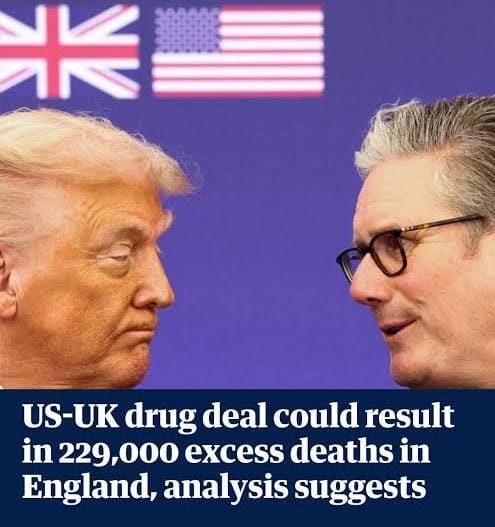
US–UK Drug Deal Trigger 229,000 Excess Deaths in England
Introduction
A new analysis published in the British Medical Journal (BMJ) has ignited a major political and public health debate in the United Kingdom. According to the study, a pharmaceutical agreement between the United States and the United Kingdom could potentially contribute to around 229,000 excess deaths in England by 2036 if higher medicine costs force the National Health Service (NHS) to divert funding away from essential healthcare services.
The findings have sparked intense reactions from healthcare professionals, politicians, economists, and patient advocacy groups. While critics argue that the agreement prioritizes pharmaceutical profits over public healthcare, the UK government insists that the deal will improve access to innovative medicines and strengthen the country’s life sciences sector. The controversy has become one of the most significant healthcare policy debates of the year.
Understanding the US–UK Pharmaceutical Agreement
The pharmaceutical agreement was reached as part of wider trade negotiations between the United States and the United Kingdom. Under the deal, the UK agreed to increase spending on new and innovative medicines, with estimates suggesting that prices paid for certain new drugs could rise by approximately 25 percent over the next decade. In return, British pharmaceutical exports would avoid potentially severe tariffs in the American market while British patients would gain quicker access to advanced medicines.
Supporters describe the agreement as a strategic investment in medical innovation. They argue that encouraging pharmaceutical companies to launch their newest treatments in Britain could improve patient outcomes and make the UK a more attractive destination for research and development.
However, opponents believe the agreement places an enormous financial burden on the NHS, one of the world’s largest publicly funded healthcare systems.
Why Researchers Predict 229,000 Excess Deaths
The BMJ analysis does not claim that the medicines themselves would cause deaths. Instead, the projected deaths are linked to the financial consequences of paying significantly more for new drugs.
Researchers estimate that approximately £44.7 billion may need to be redirected within the NHS by 2036 to cover the increased medicine costs if no additional government funding is provided. They argue that when healthcare budgets are diverted from existing services such as cancer treatment, heart disease care, respiratory services, diagnostics, emergency care, and preventive medicine, patients could experience longer waiting times, delayed treatment, and poorer health outcomes.
Using established public health models, the researchers projected that these reductions in healthcare capacity could result in approximately 229,000 excess deaths in England over the coming decade. If the wider impact on publicly funded adult social care is also included, the estimate rises to around 291,000 excess deaths.
Which Patients Could Be Most Affected?
According to the analysis, the greatest impact would likely fall on patients already suffering from chronic illnesses. Individuals with cardiovascular disease, respiratory disorders, gastrointestinal diseases, and cancer could experience the largest increase in health risks due to reduced NHS capacity.
These conditions often require continuous monitoring, specialist consultations, diagnostic testing, surgery, rehabilitation, and long-term medication. If hospitals and community health services receive less funding because more money is allocated to purchasing expensive medicines, researchers believe these patients could face treatment delays that increase mortality risks.
Healthcare experts emphasize that even relatively small reductions in healthcare spending can produce significant population-level effects when millions of patients depend upon public healthcare services.
Government Rejects the Estimates
The UK government has strongly challenged the conclusions of the BMJ analysis.
Officials argue that the estimated £44.7 billion cost is not accepted by the Department of Health and Social Care. Ministers maintain that future NHS funding decisions will ensure that patients continue receiving essential services while also benefiting from improved access to innovative medicines.
Government representatives also argue that the agreement helps protect British pharmaceutical exports from potentially damaging American tariffs and encourages global pharmaceutical companies to invest more heavily in the UK. They insist that increased spending on breakthrough medicines could ultimately improve survival rates for many serious diseases.
In other words, the government disputes both the financial assumptions and the projected health consequences presented in the BMJ analysis.
Why the Study Remains Controversial
The controversy largely stems from the assumptions used in the researchers’ modelling.
The projected deaths are not direct observations but forecasts based on economic and healthcare models. The estimates assume that additional medicine costs would have to be absorbed within the existing NHS budget rather than being matched by new government funding.
Critics of the study argue that future governments may increase NHS budgets, reducing or eliminating the need to cut frontline healthcare services. Others believe the long-term health benefits of wider access to innovative medicines may offset at least some of the predicted harms.
Supporters of the analysis counter that healthcare budgets are already under considerable pressure, making the researchers’ assumptions realistic given current financial constraints.
Political and Public Response
The publication has generated strong reactions across Britain’s political landscape.
Opposition politicians and healthcare campaign groups have demanded greater transparency regarding the government’s internal assessment of the agreement. Several organizations have called for the release of official impact studies so that Parliament and the public can independently evaluate the financial and healthcare implications.
Health policy experts have also questioned whether increasing pharmaceutical spending without guaranteed additional NHS funding represents good value for taxpayers. Many argue that protecting frontline healthcare services should remain the highest priority within any future healthcare budget.
Meanwhile, supporters of the agreement believe that attracting pharmaceutical investment and ensuring rapid access to cutting-edge medicines will strengthen Britain’s healthcare system over the long term.
Conclusion
The BMJ analysis has brought renewed attention to the difficult balance between encouraging pharmaceutical innovation and maintaining a sustainable public healthcare system. While researchers warn that higher medicine costs could contribute to 229,000 excess deaths if NHS services lose funding, the UK government firmly disputes these projections and argues that the agreement will ultimately benefit both patients and the economy.
At present, the projected death toll remains a model-based estimate rather than a confirmed outcome. Whether these forecasts become reality will depend largely on future government funding decisions, NHS budget allocations, and the actual implementation of the pharmaceutical agreement over the coming decade.
The debate highlights a broader challenge faced by healthcare systems worldwide: how to provide patients with access to the latest life-saving medicines while ensuring that essential healthcare services remain adequately funded. As the agreement moves forward, policymakers, healthcare professionals, and researchers will closely monitor its financial and public health impact to determine whether the benefits outweigh the potential risks.