Venezuela experienced a devastating double-earthquake sequence: a magnitude 7.2 foreshock was followed just 39 seconds later by a massive magnitude 7.5 mainshock. The shaking caused structural damage across multiple states, including Yaracuy, Carabobo, La Guaira, and the Capital District. Thousands died or were injured, and hundreds of thousands were displaced. For a nation already facing a crumbling public healthcare system due to a decade-long economic crisis and mass emigration of medical professionals, this disaster pushed regional hospitals beyond their limits. The following sections outline the unfolding medical crisis, the state of major health facilities, the threat of disease, and the arrival of crucial international aid.
1. The Catastrophe and the Initial Surge
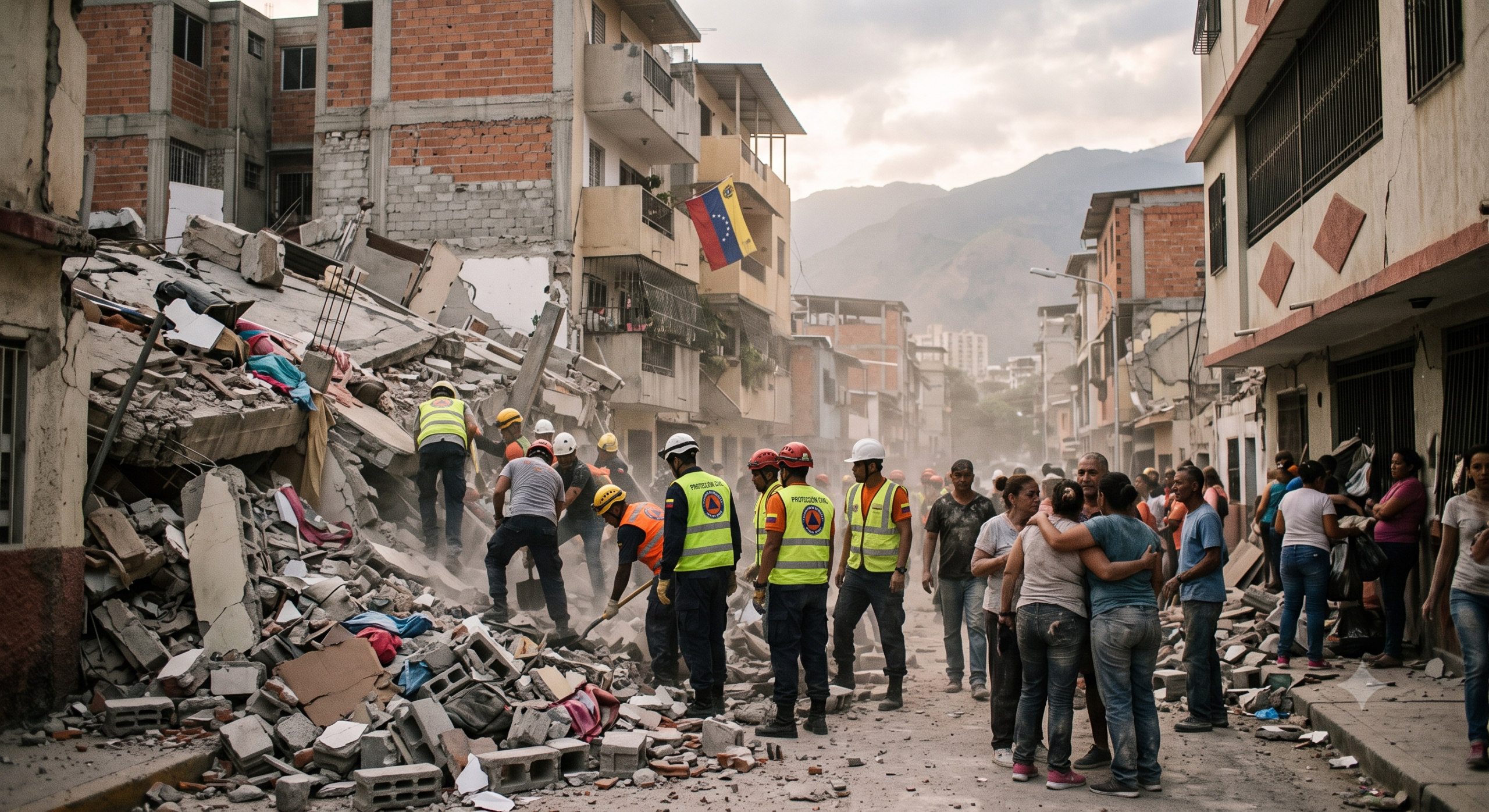
The shallow depth of the twin quakes (10 to 22 km) increased surface damage, causing old apartment complexes, brick homes, and public buildings to collapse into an estimated 1.2 million tons of concrete debris. Within the first 48 hours, local volunteers and professional civil protection units managed to rescue thousands of survivors from the rubble. However, as the opportunity for rescue closed, the focus shifted from finding survivors to keeping the living alive. The influx of casualties overwhelmed regional emergency rooms. More than 11,000 injuries were officially recorded within the first week, with many involving complex crush injuries, severe head trauma, open fractures, and internal bleeding in venezuela.
Chronic Shortages Compounded
Even before the earthquakes, Venezuelan public hospitals struggled with severe shortages, often lacking basic supplies like sterile gauze, surgical gloves, antibiotics, and running water. When the influx of casualties occurred, these shortages worsened dramatically.
Surgical Backlogs: Operating rooms quickly became overloaded, especially in trauma-orthopedics and neurosurgery.
Triage in the Dark: Rolling blackouts and damaged backup generators forced medical teams in several facilities to perform emergency triage and stabilize fractures using their mobile phone flashlights.
Morgue System Failures: The high number of fatalities quickly overwhelmed hospital morgues and local forensic services. The failure of refrigeration systems due to grid damage posed immediate health risks, forcing officials to set up makeshift identification centers in open parking lots.
2. Structural Integrity and Exposed Facilities
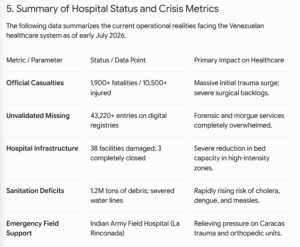
Reports from the Pan American Health Organization (PAHO) and the World Health Organization (WHO) indicate that at least 38 hospitals nationwide faced direct structural or operational damage. Initial mapping showed that 91 emergency facilities were located in areas experiencing severe shaking (Modified Mercalli Intensity VI or higher) venezuela.
Structural Compromise: Three major hospitals were declared completely non-operational due to broken load-bearing pillars and partial roof collapses, forcing evacuations of patients into nearby streets and courtyards.
Loss of Specialized Staff: The situation worsened as many specialized doctors and administrative leaders were trapped or missing in the rubble of their homes. In La Guaira, the sudden absence of key personnel in maternal care and neonatal units left remaining staff to handle high-risk deliveries without specialized support venezuela.
The Secondary Crisis: Infection and Disease
A week after the initial shocks, the nature of the medical emergency changed. While acute trauma cases continued to arrive, hospital staff faced a second wave: infected wounds and the risk of widespread waterborne and vector-borne diseases in venezuela.
 Major Public Health Concerns
Wound Infections and Gas Gangrene: Many survivors rescued after being trapped for long periods arrived at clinics with deep wounds heavily contaminated with dust and rubble. The lack of strong antibiotics and sterile surgical conditions led to high rates of post-traumatic infections, increasing the demand for emergency amputations to unprecedented levels.
Waterborne Pathogens: Major water treatment plants and distribution pipelines in Yaracuy and the Capital District were damaged. The lack of clean water raised fears of cholera and acute diarrheal diseases, which can be deadly for young children and the elderly in a population already facing high rates of malnutrition.
Vector-Borne Diseases: The hot climate in north-central Venezuela, combined with broken drainage systems and standing water, created perfect breeding conditions for mosquitoes. Public health agencies prepared for increases in dengue, yellow fever, and malaria.
Preventable Outbreaks: Due to long-standing gaps in routine healthcare access and low vaccination rates among children over the past decade, crowded refugee settings left many vulnerable to highly contagious, vaccine-preventable diseases like measles.
4. International Relief and Field Operations
Recognizing that the domestic health system could not.handle the crisis alone, international partners began sending rapid-response medical units to stabilize the situation in venezuela.
Operation Amistad (India)
One of the first international medical teams to arrive was a 41-member task force from the Indian Army’s 60 Para Field Hospital, deployed via a 23-hour airlift operation covering 14,000 kilometers using IAF C-17 Globemaster III aircraft in venezuela.
Capabilities: The unit delivered 66 tons of humanitarian aid, including specialized trauma equipment, medicines, and two BHISHM Cubes (Bharat Health Initiative for Sahyog, Hita & Maitri). These AI-enabled, modular emergency medical units can be fully deployed in under 12 minutes, offering independent oxygen generation, ventilators, and mini operating theaters capable of managing hundreds of acute trauma cases.
Impact: Operating 24/7 and providing free care, the field hospital has treated hundreds of outpatients, performed critical orthopedic surgeries, and stabilized long-trapped survivors. One example is a 79-year-old woman rescued from the rubble six days after the quake, suffering from severe arterial ulcers and fractures in venezuela.
Global Coordination
At the same time, tents and supply lines from the Red Cross, the World Food Programme (WFP), and PAHO arrived in La Guaira and surrounding coastal towns. These organizations distributed free hygiene kits, clean water, and basic medications to long lines of citizens, working to prevent the spread of infectious diseases while local hospitals tried to rebuild.