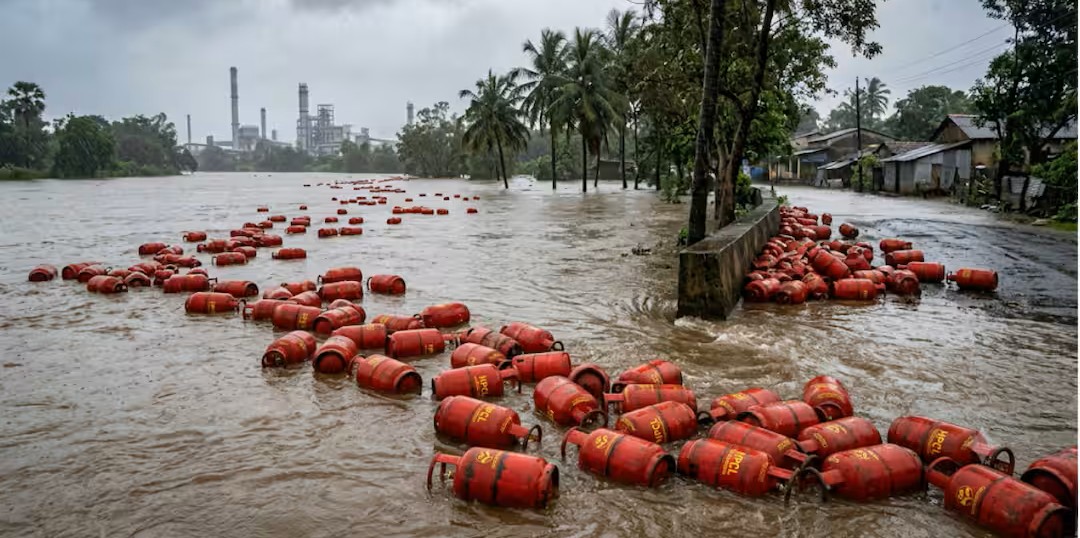
The heavy monsoon rains in Maharashtra have once again brought out the wrath of nature. In a startling development, about 3,000 Liquefied Petroleum Gas (LPG) cylinders found themselves in a river due to flooding that caused damage to the storage area. This unfortunate development raised fears about safety issues, environmental hazards, and the fragility of essential infrastructure in the monsoon period of India. However, measures were put in place in time to avoid a catastrophe.
Heavy Monsoon Rains Cause the Incident
The disaster happened because of heavy rainfall, which led to the overflowing of rivers in certain parts of Maharashtra. Flash floods had resulted in destruction of the road infrastructure, bridges, and business premises in the vicinity. An LPG Cylinder Storage Yard was one of those locations where the damage took place near the river bank.
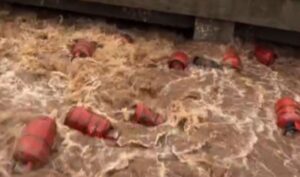
Due to sudden water surge, all the cylinders from the storage yard were washed away by the swift flow of waters into the river. Footage taken in social media depicted hundreds of cylinders being floated around and bumping against each other due to rapid water flow. This phenomenon became the subject of national interest.
Almost 3,000 LPG Cylinders Swept Away
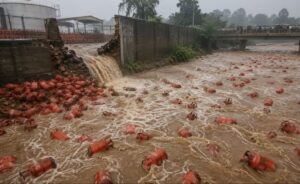
It was reported that roughly 3,000 domestic LPG cylinders had found their way into the river. Majority of the cylinders were either empty or not completely filled, thereby eliminating the danger of a massive explosion. Nonetheless, authorities stressed that all cylinders were to be assumed dangerous until they had been recovered.
Emergency services, disaster management team members, and the police were involved in tracking the flow of these cylinders. Citizens living near the banks of the river were instructed not to approach the cylinders if seen and inform the authorities accordingly.
Massive Cylinder Recovery Operation Initiated
A short while after the accident, joint efforts from district officials, emergency services, and LPG cylinder suppliers began a major clean-up and rescue operation. The search teams used boats, cranes, and other machinery to recover cylinders that were stuck in the river banks, thickets of vegetation, and areas of the river where it was comparatively shallow.
The officials worked together with the villagers, and the latter helped to locate cylinders that had drifted into neighboring farmlands and flood plains. This was a risky activity since a damaged cylinder could explode due to water damaging its valve system.
It was said that each recovered cylinder would be subjected to a safety test before reusing or disposing of it if it was damaged.
Safety Measures Helped Prevent a Disaster
Despite the frightening images, officials clarified that the chances of a big explosion were quite low. LPG cylinders have sturdy constructions made from steel and many safety elements which help resist strong external impacts.
Specialists noted that a cylinder does not always explode after coming into contact with water or other substances or hitting something else. Explosion is possible only in the case of a gas leak and ignition of the leaked gas. Despite this, all precautionary measures were taken to ensure maximum safety.
Local residents were also instructed to monitor their surroundings for gas leaks and avoid touching or retrieving any floating cylinders themselves.
Impact on Local Communities
The floods had disrupted people’s lives in a number of places in Maharashtra. Roads were not accessible, houses had flooded, and the agriculture fields had been badly damaged. The power supply was disrupted in addition to the transport network, which posed more problems for people.
The LPG cylinder problem made the process of rescue and relief efforts even harder due to extra personnel and equipment being required to solve this problem. There were no deaths reported that could be attributed to floating LPG cylinders.
The local authorities helped the affected families while at the same time assessing the damages in the public and private property.
Environmental Concerns
The environmentalists were also concerned about this event. Even though LPG is not soluble in water, it was possible for there to be any danger because of leakage in case the cylinders were damaged and the gas released in the air. Moreover, the cylinders hindered navigation along the river.
Efforts were made to collect cylinders in order to prevent them from being carried by the water currents down the river where they could reach inhabited places.
Investigation Into Safety of Cylinder Storage
Thereafter, the relevant authorities initiated inquiries into whether safety precautions had been taken for the LPG storage facility. Concerns were also expressed regarding the siting of the storage yard, its flood readiness, and whether better anchorage systems or barriers might have helped prevent cylinders from being carried away by floods.
According to disaster management experts, any such facility that stores hazardous or essential commodities needs to include assessments for flooding dangers in their infrastructural plans, particularly in areas where monsoon rains are common every year.
Findings from the inquiry will help make future improvements in storage laws and emergency plans.
Lessons from Disaster Preparedness
The Maharashtra LPG cylinder case study highlights how extreme weather conditions pose new problems. Climate specialists have time and again warned about heavy rainfall and flooding, making the infrastructure situated near rivers and low-lying areas vulnerable.
There is a need to enhance disaster readiness through better urban planning, efficient forecasting of floods, safe handling of hazardous chemicals, and swift response strategies in emergencies. Inspections of such infrastructures before the monsoon season can be helpful in mitigating the risk involved.
Public education is as much necessary as all these measures. People must heed to advice issued during floods and not venture close to dangerous goods in floodwaters.
Conclusion
The spectacle of more than 2,800 cylinders of LPG being swept away by floods along a river in Maharashtra is nothing less than remarkable and disturbing at once. This situation has been handled effectively due to the timely action taken by the disaster management authorities and local administrative bodies, which averted any major disaster from taking place. This particular case becomes an example of why there needs to be flood-resistant infrastructure in place in India, which has been witnessing some very intense monsoons recently.