
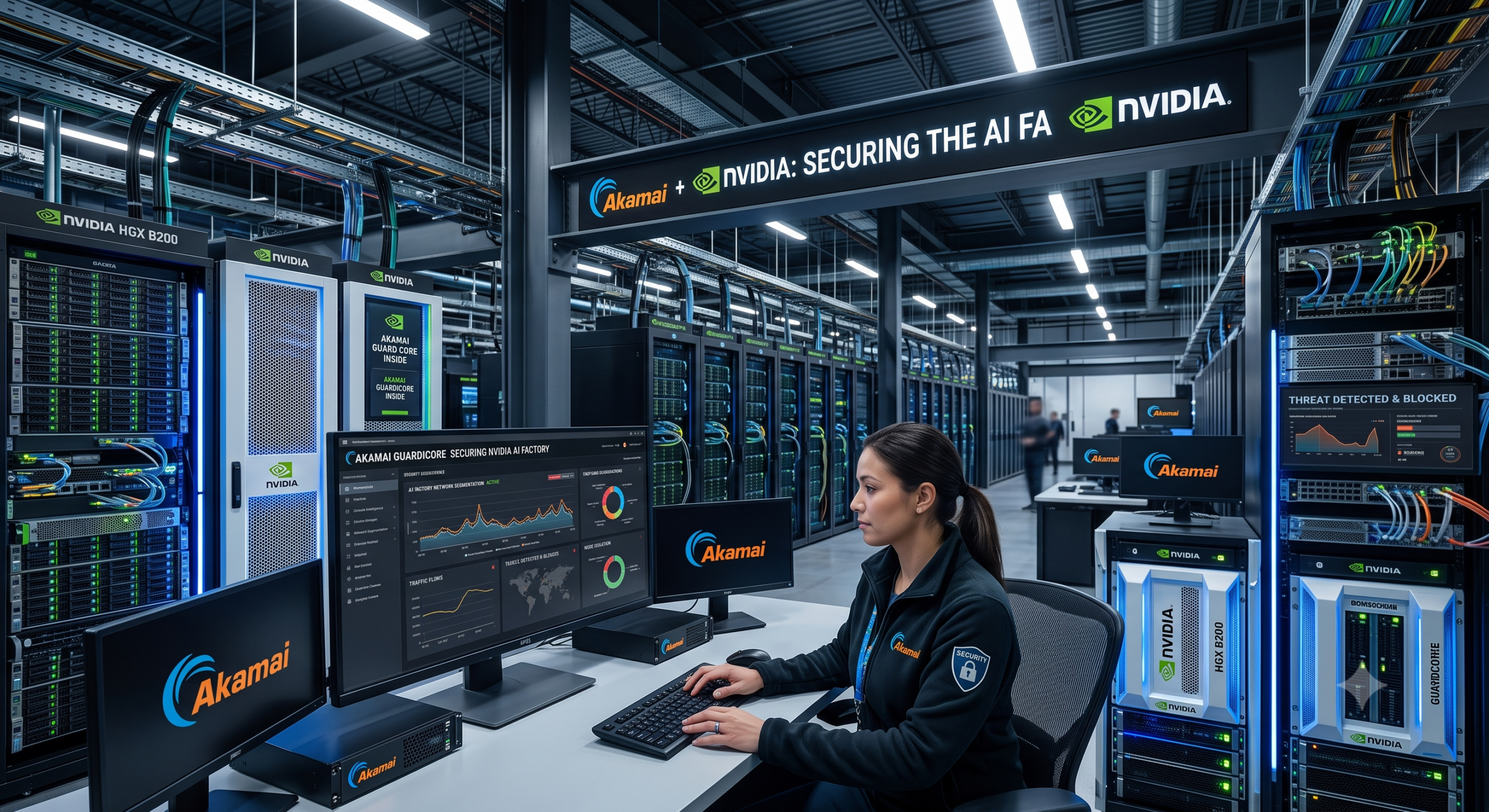
Akamai and NVIDIA Architect Zero Trust Inside the AI Factory
The modern enterprise is changing the way it works. It is moving from software to AI that can make decisions on its own. At the heart of this change is the AI Factory. It is a computer system that has many connected graphics cards, fast storage and big pipelines to handle lots of data.
However AI factories are being built quickly and security is not keeping up. In the past infrastructure teams had to make a choice. They could add security measures. Accept that it would slow things down.. They could focus on getting things done quickly and accept that it would not be as secure. In environments where every second counts teams usually chose to prioritize speed.
To solve this problem Akamai and NVIDIA are working together. They are combining Akamai Guardicore Segmentation with the NVIDIA Vera BlueField-4 STX Data Processing Unit. This partnership aims to make Zero Trust a fundamental part of the AI factory infrastructure. It does this by moving threat detection and segmentation into the infrastructure itself. This way it does not slow down the graphics cards, CPUs or storage processors that drive AI workloads.
1. The Architecture of the AI Factory
An AI factory is a data center or cloud space. It is designed to handle the lifecycle of artificial intelligence. It has pipelines that handle raw data nodes that preprocess data, clusters that train AI models engines that validate models and deployments that make AI models work in real-time.
Unlike enterprise networks an AI factory does not have isolated applications. Instead it behaves like a massive computer.
* Massive Data Ingestion & Storage Fabrics: Petabytes of data move daily from storage grids through fast file systems directly into memory pools.
* The East-West Traffic Explosion: Distributed training algorithms require graphics cards to continuously sync parameters. This creates a volume of internal network traffic.
* Volatile Workload Lifecycles: Compute nodes, container pods and autonomous software agents spin up scale out and dissolve within minutes based on training demands. This makes it hard for static network perimeters to keep up.
2. Why Traditional Security Fails High-Performance AI
Traditional security methods do not work well with AI systems. They rely on software and firewalls that slow down the AI process. When used in an AI factory these methods cause problems. Reduce performance.
The “Speed Bump on a Racetrack” Problem
Security software needs computer power to check network data. This slows down the AI process. For example checking a 400 Gbps network stream causes delays. Disrupts the AI training process.
The Visibility Blindspot in Agentic AI
Modern AI systems use software that can access data and make decisions. Traditional firewalls only monitor network traffic, not what the individual AI agent is doing. This means a compromised AI agent can easily access data.
The Expansion of the Blast Radius
AI nodes need pathways to share data. If one node is compromised the attacker can access the AI system. If a node that handles data is breached the threat can spread to other parts of the AI system.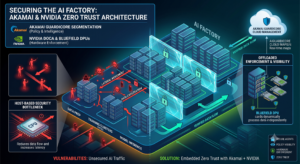
3. The Akamai and NVIDIA Integration Framework
Akamai and NVIDIA are working together to change the way security works. They are moving security directly into the hardware. This combines Akamais visibility and policy layer, with NVIDIAs fast hardware platform.
Akamai Guardicore Segmentation is the central control plane. It works in a way without needing agents. This means it can always watch and map how different parts of the system talk to each other like workloads and microservices and databases and things like Kubernetes.
It does not use IP addresses. Instead Akamai Guardicore Segmentation makes profiles based on how things work and what they do and where they come from.
NVIDIA Vera BlueField-4 STX and DOCA is another part. It is called the enforcement layer. The NVIDIA Vera BlueField-4 STX DPU is a piece of hardware. It helps with data. Takes some work away from the main computer parts.
The NVIDIA DOCA software tells the DPU what to do. The DPU is like a network interface. It is in the path of the data. Can look at the data and make decisions.
Akamai Guardicore Segmentation makes security rules. These rules go into the BlueField hardware. This means the system can filter packets and collect information and find things happening in the network and it can do all this very fast.
The way this all works together is like a plan. First Akamai Guardicore Segmentation makes sure it can see everything. Then it makes rules based on what it sees. After that the NVIDIA Vera BlueField-4 STX DPU enforces these rules, in the hardware. If something strange happens the system isolates it automatically.
How the Integrated Architecture Operates
Step 1: Seeing Everything That Is Happening
The platform shows us all the communications that are going on in the environment. It keeps track of things like training pipelines and validation sets and inference APIs and orchestration planes. It does all this without putting anything into the host operating system. This gives the people in charge an updated picture of how the data is moving through the AI system.
Step 2: Making Rules Based On What Each Job Does
We make rules based on what each workload’s supposed to do not where it is. For example we might say that a preprocessing node can look at the data and write to a place where we put the data while it is being worked on.. It cannot connect to the place where we keep the model weights or the internet. These rules change automatically when the microservices get bigger or the pods start again.
Step 3: Making Sure The Rules Are Followed At The Hardware Level
When we make a rule in Akamai Guardicore it gets turned into a hardware rule, on the BlueField DPU using NVIDIA DOCA. When some data leaves a compute node the DPU checks it to make sure it is following the rules. If it is the data keeps moving at speed. If not it gets stopped away. The CPU and GPU do not even know this check is happening so they can keep doing their job without any problems.
Step 4: Stopping Problems From Spreading
If something bad gets into one of the nodes the DPU can tell that something is not right. It can stop the problem from spreading to parts of the system right away at the hardware level. This keeps the rest of the AI system running without any downtime. The AI factory can just keep going like nothing happened.